Water Safety
Developing water awareness, safe habits, and the understanding that lessons build skills, but never replace active adult supervision.
Our Core Safety Principle
Swimming lessons teach crucial comfort, breath control, and mobility skills, but no one is ever "drown-proof." Lessons are one important layer of protection. They do not replace undistracted adult supervision, pool fences, self-closing gates, or emergency readiness.
Safer habits for every family
1. Constant Visual Supervision
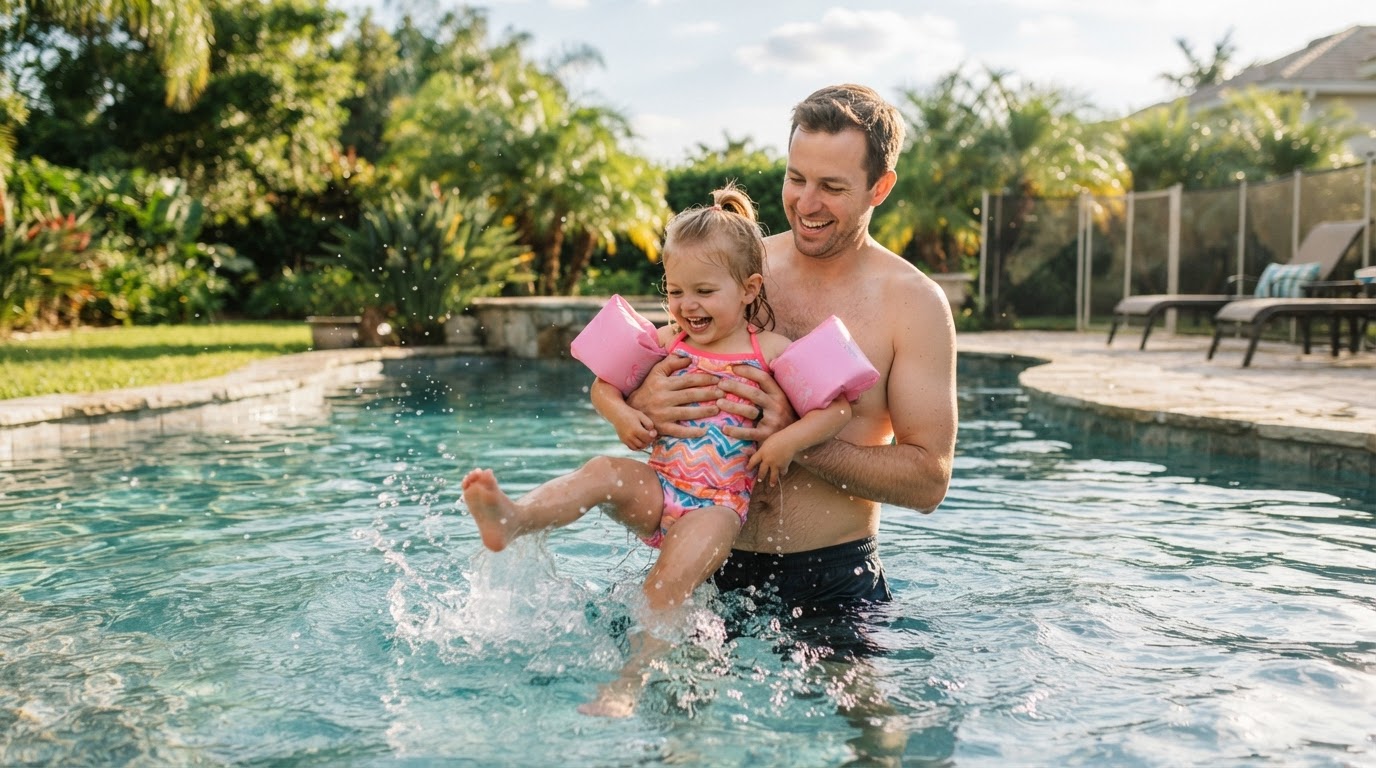
Assign a designated adult "Water Watcher" who is not reading, using a phone, or socializing while swimmers are in the pool. When supervising beginners, stay within arm's reach ("touch supervision").
2. Physical Barriers & Alarms
Backyard pools should have a four-sided fence at least four feet tall with a self-closing, self-latching gate. Pool surface alarms, door alarms, and secure pool covers add vital extra barriers.
3. Swim Competence & Comfort
Learning to relax in the water, blow bubbles, float calmly on the back, turn back toward the wall, and recover to safety builds practical resilience and confidence in every swimmer.
4. Emergency Preparedness
Parents, older siblings, and pool owners should learn CPR and keep a charged phone and reaching equipment (such as a shepherd's crook or life ring) pool-side at all times.
Build Safer Swimming Habits
Discuss swim lessons tailored to your swimmer's comfort and ability.